What Is a Live Casino? How Online Live Dealer Studios Really Work
If you have ever wondered what happens behind the camera at a live dealer roulette or blackjack table, this comprehensive breakdown explains the optical engineering, control rooms, and physical hardware that power modern live gaming.
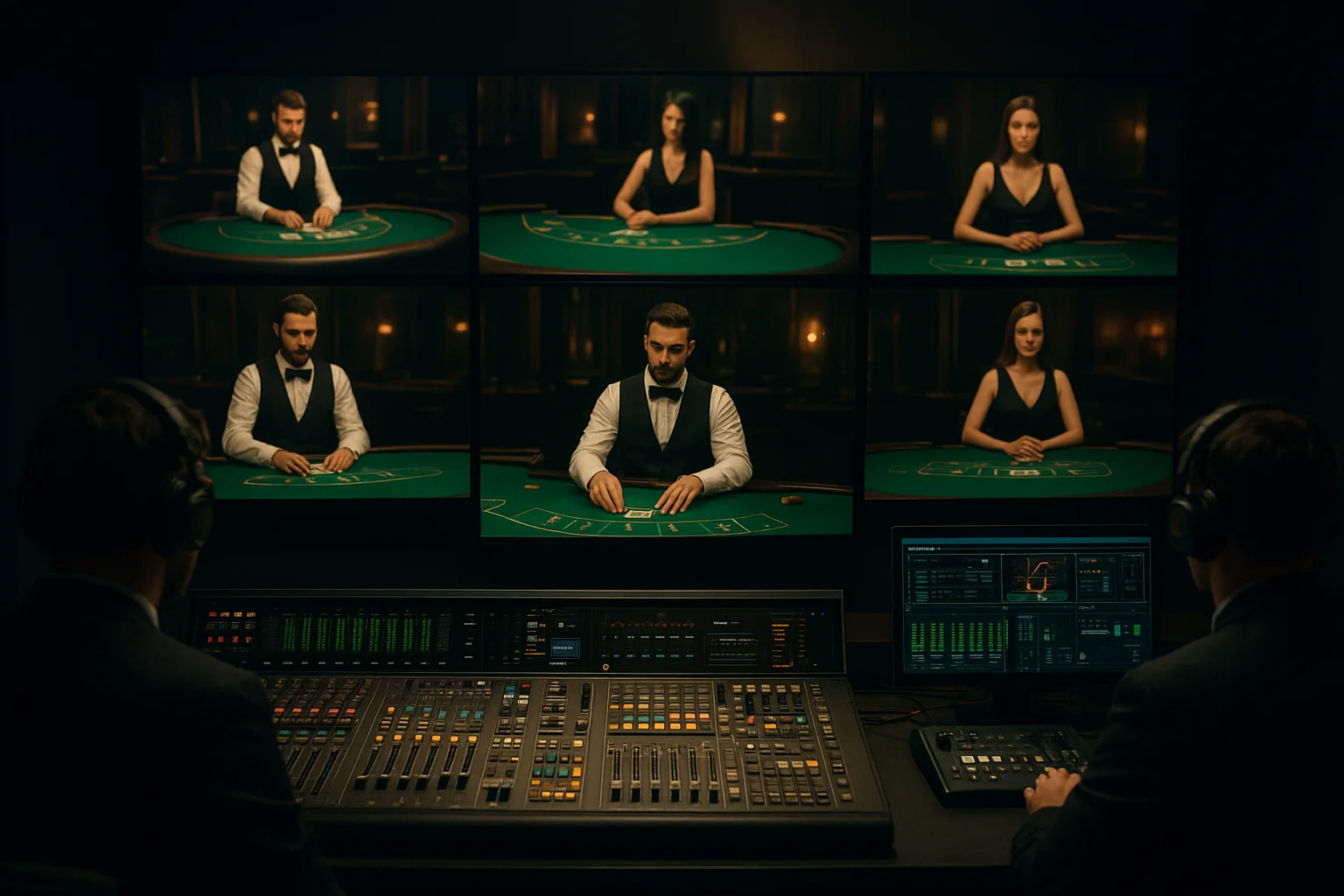
The Broadcast Studio Architecture
A live casino is not a software simulator. It is an industrial television broadcast facility spanning thousands of square meters. Companies like Evolution Gaming, Ezugi, and Playtech operate sprawling complexes in European cities such as Riga (Latvia), Sliema (Malta), and Tbilisi (Georgia). Inside these acoustic-damped studios, hundreds of purpose-built gaming tables sit beneath overhead theatrical lighting rigs.
Each table is surrounded by three to five high-definition industrial cameras. One camera captures the wide panoramic shot of the dealer, a second focuses tightly on the card shoe or roulette cylinder, and a third provides a dramatic bird's-eye perspective of the felt layout. In games like Immersive Roulette, high-speed 200-frame-per-second cameras capture the ball dropping into the winning pocket, feeding an immediate slow-motion replay directly to your phone screen.
Optical Character Recognition (OCR)
The true technological breakthrough behind live casino gaming is Optical Character Recognition. In a land-based casino, a human dealer must manually calculate chips and pay each winner. In an online broadcast environment with ten thousand simultaneous mobile punters, manual payouts are impossible.
Instead, specialized card decks feature microscopic barcodes on their borders. As the croupier draws each card from the shoe, it passes over an optical laser scanner embedded flush with the table surface. The exact card suit and value are identified in under twenty milliseconds. The game server cross-references this result with all active digital bets, instantly calculating winnings and updating player wallets before the physical card even touches the felt.
The Game Control Unit (GCU)
Bolted beneath every live casino table is an unassuming piece of specialized hardware known as the Game Control Unit. The GCU contains hardware-level video encoding processors and input controllers. It receives raw optical camera feeds, syncs the live audio, translates roulette wheel laser signals, and packages the data stream for internet distribution. Without the GCU, real-time live streaming of card games would be technically unfeasible.
The Mission Control Room
Overlooking the studio floor is a secure control room staffed by technical directors, video engineers, and certified floor pit bosses. Wall-sized monitors track every active table simultaneously. If a dealer makes a mechanical dealing mistake, or if a card scanner fails to read a barcode, the automated system freezes the table timer. The pit boss immediately intervenes to resolve the round according to official gaming regulations, ensuring complete protection for all punters.
Why Real Physical Equipment Matters for Indian Punters
For players in India who have grown up playing Diwali card sessions, trusting an invisible computer algorithm is difficult. A live dealer table restores pure physical trust. You watch the physical dealer unbox a sealed deck, perform a riffle shuffle on velvet felt, and burn the top card. The laws of physical momentum govern the roulette ball, giving you complete peace of mind that every round is legitimate.
Ready to experience authentic live tables? Learn about our full game catalog or explore how easy it is to start with a ₹100 UPI deposit.
Join authentic live tables today
Message our WhatsApp support desk to receive your ID with ₹100 deposit.